
Design Contributions
This page includes my contributions towards other aspects of Crimson Tactics' designs.
AI Design
The underlying principles that guide the AI were ideated by me.
Each character is assigned an AI profile during battles. I directly designed these profiles, namely:
Vanguard - Frontline attackers that engage the enemy's first line of attack. Useful for units with high defense and good strength.
Attacker - Aggressive units that actively seek to attack the closest units. Useful for units with high strength but low magic.
Ranged - Cautious units that rely on their their mobility and range to employ hit-and-run tactics.
Infiltrator - High mobility units that avoid the frontline to target vulnerable and protected units. Useful for units with high agility but low strength.
Rearguard - Defensive units with high defense that prioritize defending weaker units.
Spellcaster - Magical units that rely on range and high magic stats to deal damage from afar.
Support - Magical units that are not not offensive. They actively avoid any conflicts and focus on healing their teammates. They require protection from any attackers.
Summoner - Magical units that spawn new units on the field for offense, support as well as defense.
Additionally, the AI works seamlessly with the dynamic difficulty setting in the game.
With valuable feedback from my team, I was able to improve this design and polish it to a high degree of quality.

Systems Design
Multiple systems must work together in complex game like an RPG. I created a few systems that worked with each other as well as the systems of other designers. A few are:
Push Back System - Determines the 'Push Back' mechanic.
Experience and Skill Points - Determines the rate at which characters gain XP and the SP needed to unlock more skills.
Battle Rewards - The loot earned after winning encounters.
Loyalty System - Calculates the loyalty units have towards their allies.
Economy System - Calculates and balances the cost of various resources.
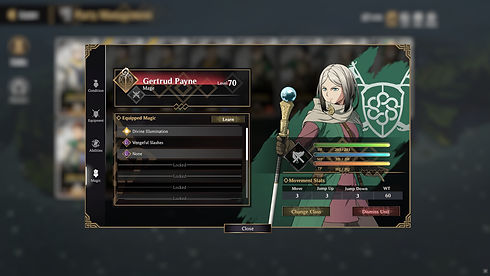
Special Abilities & Magic Spells - Designed various abilities and their effects.
Tutorial System - Designed all the tutorials meant to teach newcomers the game mechanics.
World Lore System - Designed the system that gives player vital information about the narrative for a more immersive experience.
Crafting System - Designed a system so that new items can be crafted using raw materials.
Economy Design
Gold and Experience Points (XP) are a few examples of the many variables that are called 'resources'. Balancing these resources requires a robust economic system so that each variable can interact with each other.
Creating this economy involved creating and balancing resources like:
Experience upon leveling up.
Buying and selling prices of weapons, armor and other items found in shops.
Cost of hiring more units.
Gold earned by player across the various activities.
Crafting recipes, availability and costs.

Narrative Design
Assisted with the overall story ideation:
Wrote various descriptions for items and equipment.
Conceptualized and created the World Lore System that gave important narrative information about locations, characters and factions.
Designed a system of flags and triggers that activate upon certain conditions being met during battles. These flags played cutscenes or caused changes in the battle conditions that supported the narrative flow.
